
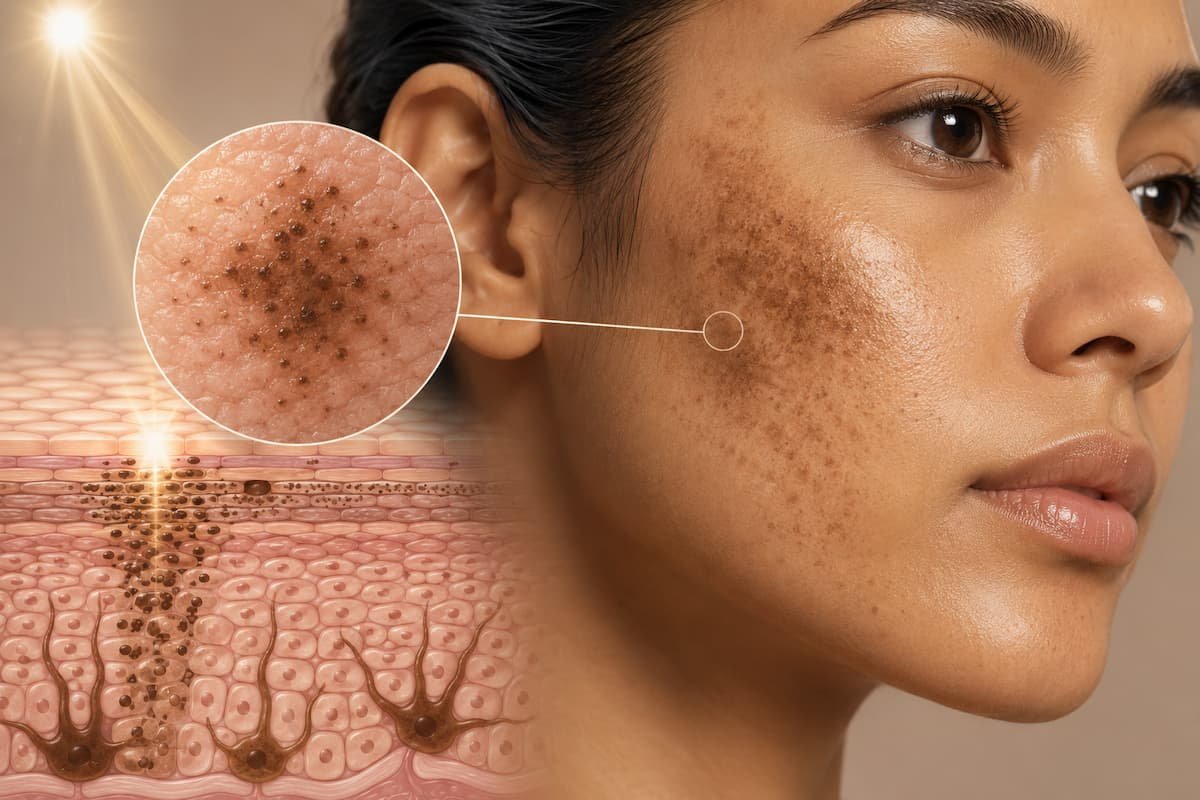
Every dark spot on your face is a record. A record of inflammation you forgot. A record of sun exposure you barely noticed. A record of hormones shifting, medications changing, or a pimple you picked at three summers ago. Hyperpigmentation is not a flaw in your skin’s design. It is your skin doing exactly what evolution programmed it to do—protecting itself by producing more melanin, the pigment that shields DNA from damage. The problem is not the mechanism. The problem is that the mechanism sometimes forgets to turn off.
Melanin is produced by cells called melanocytes, which sit in the basal layer of your epidermis like tiny factories. When triggered by UV radiation, inflammation, or hormonal signals, these factories ramp up production. The pigment gets packaged into granules and transferred to surrounding skin cells, which carry it upward as they migrate to the surface. This process is elegant, efficient, and usually self-limiting. The trigger fades, production normalizes, and the excess pigment gradually sheds with the natural turnover cycle. But when the trigger is persistent, the melanocytes become hyperactive, or the transfer process gets stuck, the result is a dark spot that outlasts its original cause. Understanding why this happens is the first step toward making it stop.
The Melanin Paradox: Melanin exists to protect your DNA from UV damage. Yet the very process of producing excess melanin can create uneven, persistent spots that people find distressing. Your skin’s defense mechanism becomes the problem it was trying to prevent.
The Three Main Triggers: Sun, Inflammation, and Hormones
Hyperpigmentation is not one condition. It is a symptom with multiple causes, and treating it effectively requires knowing which cause is driving your spots. The three primary categories are solar, post-inflammatory, and hormonal. Each operates through slightly different mechanisms and responds to different interventions.
Solar Hyperpigmentation
UV radiation is the most common and most stubborn trigger. When sunlight hits your skin, it damages DNA directly and generates reactive oxygen species that attack cellular structures. Melanocytes interpret this as an emergency and produce more melanin as a shield. With repeated exposure, some melanocytes become permanently sensitized, continuing to overproduce even with minimal stimulation. This creates solar lentigines, commonly called age spots or liver spots, which are essentially permanent tan marks. They have nothing to do with age or liver function. They are simply cumulative photodamage written in pigment.
Post-Inflammatory Hyperpigmentation
Any inflammation can trigger melanin overproduction. Acne, eczema, insect bites, cuts, burns, or aggressive cosmetic procedures all qualify. The inflammatory cascade releases cytokines that stimulate melanocytes. In darker skin tones, this response is often more pronounced because melanocytes are already more active and numerous. The dark mark left after a pimple heals is not scar tissue. It is excess pigment that got deposited during the inflammatory phase. Picking at blemishes worsens this dramatically by increasing inflammation and driving pigment deeper into the dermis, where it becomes much harder to treat.
Hormonal Hyperpigmentation
Melasma is the classic example, triggered by estrogen and progesterone fluctuations during pregnancy, oral contraceptive use, or hormone replacement therapy. Unlike sun spots, melasma often appears in symmetric patches across the cheeks, forehead, and upper lip. The hormonal stimulation makes melanocytes hypersensitive to UV exposure, so even minimal sun can trigger dramatic darkening. This is why melasma is notoriously difficult to treat and notoriously easy to relapse. The hormonal component creates a persistent underlying drive that topical treatments alone often cannot fully suppress.
Why Dark Spots Linger Longer Than the Original Problem
The persistence of hyperpigmentation comes down to three factors: melanocyte memory, dermal trapping, and turnover speed. Once melanocytes have been repeatedly stimulated, they develop a kind of biochemical memory. They require lower thresholds to reactivate and produce pigment faster and more abundantly with each subsequent trigger. This is why someone who has had hyperpigmentation once is more likely to develop it again, even from minor insults that would not have bothered their skin before.
Dermal trapping occurs when melanin pigment falls below the epidermis into the dermis. This happens with deeper inflammation, trauma, or aggressive picking. Epidermal pigment sheds with the normal 28-day turnover cycle. Dermal pigment has no such exit route. It sits there, visible through the translucent epidermis, for months or years. Topical treatments that only affect the epidermis cannot reach it. This is why some spots refuse to fade regardless of how many brightening serums you apply. The pigment is simply too deep.
Turnover speed matters because it determines how quickly pigmented cells reach the surface and are shed. Young skin turns over in about 28 days. Skin over 40 may take 45 to 60 days or longer. This means a single round of treatment might not even allow one full cycle of pigmented cells to exit. Patience is not just a virtue in treating hyperpigmentation. It is a biological necessity.
| Type of Hyperpigmentation | Primary Trigger | Typical Location | Treatment Difficulty |
|---|---|---|---|
| Solar lentigines | Cumulative UV exposure | Face, hands, forearms, chest | Moderate |
| Post-inflammatory | Acne, eczema, trauma, procedures | Site of original inflammation | Variable by depth |
| Melasma | Hormones + UV interaction | Cheeks, forehead, upper lip, jawline | High, prone to relapse |
| Dermal melanosis | Deep trauma, pigment dropped to dermis | Variable, often post-acne | Very high, often needs lasers |
What Actually Works to Fade Existing Spots
The treatment landscape for hyperpigmentation is crowded with promises and sparse on evidence. But several approaches have solid scientific support when used correctly and consistently. The key is matching the treatment to the type and depth of pigment, and committing to a timeline measured in months, not weeks.
Hydroquinone
Once the gold standard and still widely used, hydroquinone works by inhibiting tyrosinase, the enzyme that converts tyrosine into melanin. At concentrations of 2% over-the-counter or 4% prescription, it can effectively suppress melanin production in active melanocytes. However, it does not remove existing pigment. It only prevents new pigment from forming while the old pigment sheds naturally. This means results take weeks to months. Prolonged use at high concentrations has been associated with exogenous ochronosis, a paradoxical darkening condition, particularly in darker skin tones. Cyclic use with breaks is often recommended.
Vitamin C
L-ascorbic acid and its derivatives inhibit tyrosinase and provide antioxidant protection against UV-induced oxidative stress that triggers melanin production. It is less potent than hydroquinone but safer for long-term use and offers additional collagen-boosting benefits. Stability is the main challenge. L-ascorbic acid oxidizes quickly when exposed to air and light, rendering it ineffective. Look for stabilized formulations, opaque packaging, and concentrations between 10% and 20% for optimal efficacy without excessive irritation.
Retinoids
Retinoids accelerate cell turnover, which helps pigmented cells reach the surface and shed faster. They also inhibit tyrosinase transfer and reduce melanin production indirectly. Tretinoin, adapalene, and over-the-counter retinol all work on this principle. The trade-off is irritation, which can itself trigger post-inflammatory hyperpigmentation if not managed carefully. This is particularly risky for darker skin tones. Start low, go slow, and always pair with sunscreen. Retinoids also make skin more photosensitive, so without sun protection, you risk worsening the very problem you are treating.
Azelaic Acid
This dicarboxylic acid inhibits tyrosinase and has anti-inflammatory properties that make it especially useful for post-inflammatory hyperpigmentation from acne. At 15-20% concentration, it is effective and generally well-tolerated across skin tones. It also has mild antibacterial properties that help prevent new acne lesions, addressing the root cause of ongoing pigment triggers. For many people, particularly those with sensitive skin or darker complexions, azelaic acid offers the best balance of efficacy and safety.
Niacinamide
At 4-5% concentration, niacinamide inhibits melanosome transfer from melanocytes to keratinocytes. It does not stop melanin production; it stops the pigment from reaching the visible skin cells. This is a gentler mechanism than tyrosinase inhibition, making niacinamide suitable for sensitive skin and long-term maintenance. It also supports barrier function and reduces inflammation, which helps prevent new hyperpigmentation from forming. It is not the fastest treatment for existing spots, but it is an excellent preventive and adjunctive ingredient.
Chemical Peels and Lasers
Professional treatments can accelerate results by removing pigmented layers or breaking up dermal pigment. Glycolic acid peels, salicylic acid peels, and TCA peels work at various depths depending on concentration and application time. Lasers like Q-switched Nd:YAG or fractional devices target pigment with specific wavelengths. These are not first-line treatments for everyone. Darker skin tones carry higher risks of post-inflammatory hyperpigmentation from aggressive procedures. The wrong laser settings or peel depth can worsen the problem permanently. Always seek experienced practitioners who understand skin of color and who will start conservatively.
The Non-Negotiable Rule: No hyperpigmentation treatment works without daily, broad-spectrum SPF 30+ sunscreen. UV exposure reactivates melanocytes faster than any topical can suppress them. Treating spots without sun protection is like bailing water with a bucket while the boat keeps filling.
Why Prevention Deserves More Attention Than Treatment
Treating existing hyperpigmentation is slow, expensive, and often frustrating. Preventing new spots is faster, cheaper, and more effective. The prevention strategy is simple in concept but requires relentless execution.
- Daily broad-spectrum sunscreen, SPF 30 minimum, reapplied every two hours during outdoor exposure
- Hats, shade-seeking, and UV-protective clothing for extended outdoor time
- Treating acne promptly and gently to minimize the duration
- Avoid picking, squeezing, or traumatizing any skin lesion
- Managing eczema and other inflammatory conditions to reduce flare frequency
- Reviewing medications with a doctor if new pigmentation appears suddenly
- For melasma-prone individuals, discussing hormonal contraceptive alternatives with a healthcare provider
The sunscreen component cannot be overstated. UV radiation is the universal amplifier of all hyperpigmentation types. It stimulates melanocytes directly. It worsens inflammation. It makes hormonal melasma explode. It undoes weeks of topical treatment in a single afternoon. A spot that took three months to fade can return in three days of unprotected sun exposure. This is not hyperbole. It is the reality of melanocyte biology. The cells have memory, and sunlight reawakens it instantly.
Related Articles
- How Your Skin Renews Itself Every 28 Days — Understanding the turnover cycle explains why hyperpigmentation takes months to fade regardless of treatment intensity.
- Why Sun Damage in Your 20s Shows Up in Your 40s — The cumulative photodamage that creates solar lentigines begins decades before the spots appear.
- What Drinking Water Actually Does for Your Skin — Separates hydration facts from fiction so you stop chasing water as a pigment solution.
- Stress Breakouts Are Real — Cortisol Leaves Evidence on Your Face — Inflammation from stress and acne is a major driver of post-inflammatory hyperpigmentation.
- Oily, Dry, or Combination: Skin Type Myths Debunked — Misidentifying skin conditions leads to wrong treatments that can worsen inflammation and subsequent pigmentation.
Sources and References
- Kimbrough-Green CK, Griffiths CE, Finkel LJ, Hamilton TA, Bulengo-Ransby SM, Ellis CN, Voorhees JJ. “Topical retinoic acid (tretinoin) for melasma in black patients.” Archives of Dermatology, 1994. This landmark study established retinoid efficacy for hyperpigmentation in darker skin tones.
- Nordlund JJ, Grimes PE, Ortonne JP. “The safety of hydroquinone.” Journal of the European Academy of Dermatology and Venereology, 2006. This review examines hydroquinone safety, efficacy, and the risk of exogenous ochronosis with prolonged use.
- Kameyama K, Sakai C, Kondoh S, et al. “Inhibitory effect of some cosmetics on tyrosinase activity.” Pharmacology, 1995. Early study demonstrating vitamin C’s tyrosinase inhibition and potential for hyperpigmentation treatment.
- Draelos ZD. “The cosmeceutical realm.” Clinics in Dermatology, 2008. This review covers niacinamide’s mechanism of melanosome transfer inhibition and its role in pigment management.
- Verallo-Rowell VM, Verallo V, Grau MV, Grau J, Enriquez AB. “Double-blind comparison of azelaic acid and hydroquinone in the treatment of melasma.” Acta Dermato-Venereologica, 1991. This comparative study established azelaic acid as an effective alternative to hydroquinone for melasma.
- Boukari F, Jourdan E, Fontas E, et al. “Prevention of melasma relapses with sunscreen combining protection against UV and visible light: a prospective randomized comparative trial.” Journal of the American Academy of Dermatology, 2015. This study demonstrates that broad-spectrum sun protection, including visible light, significantly reduces melasma relapse rates compared to UV-only protection.
- Taylor SC, Cook-Bolden F, Rahman Z, Strachan D. “Acne vulgaris in skin of color.” Journal of the American Academy of Dermatology, 2002. This clinical review addresses the higher risk of post-inflammatory hyperpigmentation in darker skin tones and the importance of gentle treatment approaches.
This article was developed to provide a scientifically grounded understanding of hyperpigmentation mechanisms and treatments, countering the overwhelming misinformation in the beauty space. It is intended for educational purposes and does not replace consultation with a board-certified dermatologist, particularly for persistent or treatment-resistant pigmentation concerns.

Aisha Patel is the main writer and editor at GameVolts, a site she built to make neuroscience and health research useful for everyday people. She covers sleep, digital wellness, beginner fitness, skin science, and productivity — always digging into the original studies rather than recycling headlines. Aisha started GameVolts because she kept finding wellness advice that contradicted itself and rarely linked to actual evidence. Her rule is simple: if she cannot explain the mechanism behind a claim, she does not publish it.