There are days when coffee seems to stop working, concentration disappears, and even simple tasks feel harder than usual. In those moments, many people assume they need a full night’s sleep to recover. Surprisingly, a short nap can sometimes provide exactly the boost the brain and body need.
Power naps have become popular among students, office workers, athletes, and even astronauts. The idea isn’t new, but modern research has helped explain why a brief period of daytime sleep can improve alertness without leaving people feeling groggy. Among the various nap lengths people experiment with, one duration stands out repeatedly: around 20 minutes. It is often described as the “sweet spot” because it offers many benefits while avoiding some of the drawbacks associated with longer naps.
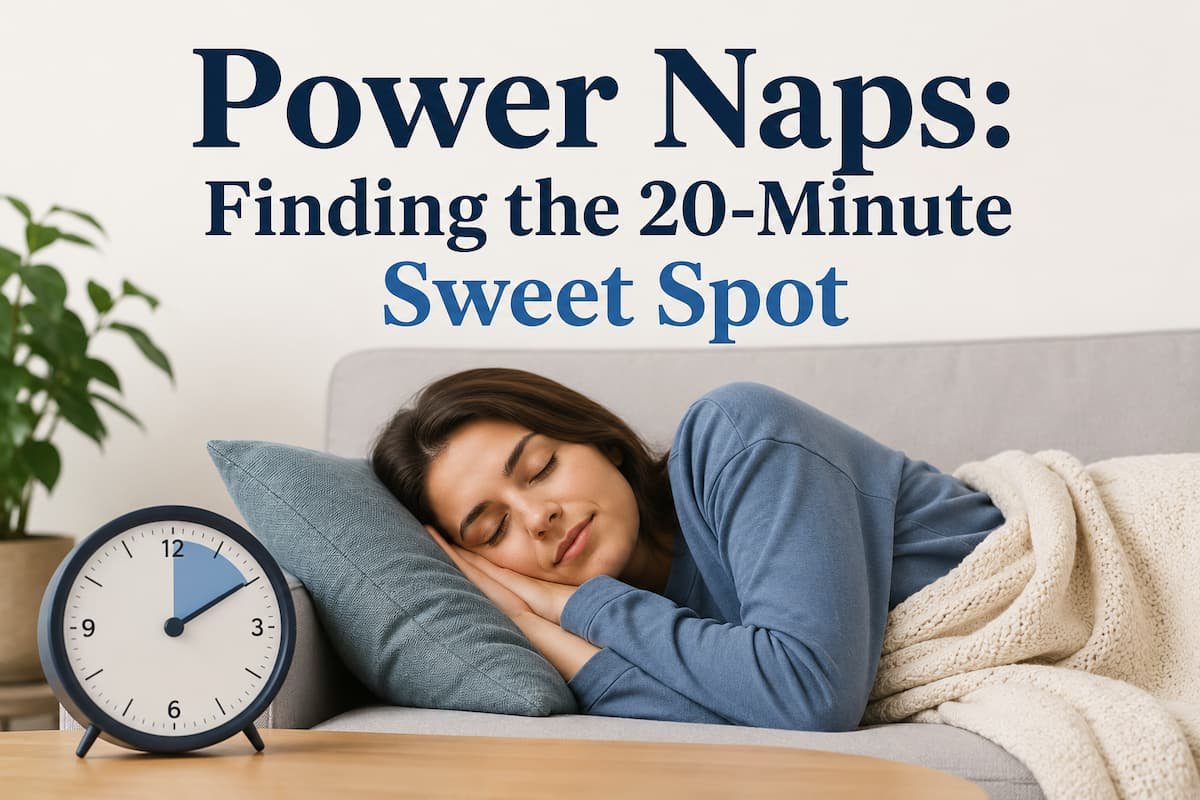
A power nap usually lasts between 10 and 20 minutes. This short period allows the brain to recharge without entering deeper stages of sleep, making it easier to wake up feeling refreshed rather than sluggish.
Why Afternoon Energy Dips Are Completely Normal
Many people blame themselves for feeling tired in the middle of the day, but biology plays a major role. Human energy levels naturally rise and fall over a 24-hour cycle. For most adults, a drop in alertness occurs sometime between early afternoon and late afternoon. This dip is influenced by circadian rhythms, not simply by eating lunch or staying busy. Because of this natural pattern, feeling sleepy around 1 p.m. to 3 p.m. is perfectly normal. A short nap can help restore energy during this period without interfering too much with nighttime sleep.
What Exactly Is a Power Nap?
A power nap is a short period of daytime sleep designed to improve alertness, mood, and mental performance. Unlike a full sleep session, a power nap aims to avoid deeper stages of sleep. The goal isn’t to replace nighttime rest. Instead, it serves as a temporary recharge that helps people stay productive and focused.
Power naps are often used by:
- Office employees are dealing with afternoon fatigue.
- College students studying for long hours.
- Shift workers with irregular schedules.
- Parents caring for young children.
- Athletes are seeking better recovery.
- People who occasionally experience poor sleep.
The Science Behind the 20-Minute Window
Sleep occurs in stages. During the first several minutes after falling asleep, the body enters light sleep. Brain activity slows, muscles relax, and the mind begins to recover from mental fatigue. If sleep continues much longer, deeper stages begin. Waking up during deep sleep often causes sleep inertia—a feeling of grogginess and confusion that can last for several minutes or even hours. A 20-minute nap generally keeps a person within lighter sleep stages, allowing them to wake up feeling refreshed instead of disoriented.
Researchers have found that short naps can improve attention, reaction time, and mood without causing the heavy sluggishness that often follows longer naps.
Different Nap Lengths and Their Effects
| Nap Length | Common Effect |
|---|---|
| 10 Minutes | Quick energy boost and improved alertness |
| 20 Minutes | Enhanced focus and reduced fatigue |
| 30-45 Minutes | May cause grogginess after waking |
| 60 Minutes | Can support memory but may involve sleep inertia |
| 90 Minutes | Completes a full sleep cycle and may improve creativity |
Benefits People Often Notice After a Short Nap
Not everyone experiences identical results, but many people report noticeable improvements after a properly timed power nap.
Some of the most common benefits include:
- Better concentration.
- Improved memory and learning.
- Reduced feelings of stress.
- Increased productivity.
- Enhanced mood.
- Improved reaction time.
- Greater mental clarity.
These benefits explain why many companies and organizations have started embracing the concept of daytime rest.
Why Longer Isn’t Always Better
People often assume that if a 20-minute nap feels good, an hour-long nap should feel even better. Unfortunately, sleep doesn’t work that way.
Long naps increase the chances of entering deep sleep. When someone wakes up during this stage, they may feel more tired than before.
In addition, lengthy daytime naps can interfere with nighttime sleep schedules, especially for individuals who already struggle with insomnia.
Moderation matters. Short naps are generally easier to fit into daily routines and less likely to disrupt healthy sleep habits.
Creating the Ideal Nap Environment
The surroundings in which someone naps can influence how restorative the experience becomes.
| Factor | Helpful Approach |
|---|---|
| Lighting | Dim or dark surroundings |
| Noise | Quiet room or white noise |
| Temperature | Comfortably cool environment |
| Position | Reclining chair or bed |
| Timing | Early afternoon |
Even closing the eyes in a quiet room for 15 minutes can sometimes produce benefits.
Set an alarm before lying down. Oversleeping by accident can turn a refreshing nap into an hour-long sleep session that leaves you feeling worse afterward.
The Best Time of Day for a Power Nap
Timing matters almost as much as duration. Most sleep specialists suggest napping during the early afternoon. This is when the body’s natural energy dip tends to occur. Napping too late in the evening may interfere with bedtime, making it harder to fall asleep at night. For many adults, somewhere between 1 p.m. and 3 p.m. works well, although individual schedules and lifestyles vary.
The Famous Coffee Nap Strategy
Some people combine caffeine with a short nap. This unusual approach is often called a coffee nap. The idea is simple. Drink a cup of coffee and immediately lie down for about 20 minutes. Since caffeine usually takes around 20 to 30 minutes to begin affecting the brain, both the nap and caffeine may work together to improve alertness. Although some studies suggest benefits, responses vary from person to person. Individuals sensitive to caffeine may prefer skipping this approach.
Do Successful People Really Nap?
Throughout history, many famous individuals reportedly included naps in their routines. Artists, inventors, athletes, and business leaders have all spoken about the value of short periods of rest.
Modern workplaces are also becoming more aware of fatigue and productivity. Some companies have introduced quiet spaces or wellness rooms where employees can take short breaks. Rather than viewing naps as laziness, many experts now recognize that strategic rest can support performance and well-being.
When Power Naps May Not Be Helpful
Power naps are not suitable for everyone. People experiencing chronic insomnia should be cautious because daytime sleep may worsen nighttime difficulties. Likewise, persistent fatigue despite adequate sleep could indicate an underlying medical condition.
Individuals with sleep disorders such as sleep apnea should discuss sleep concerns with a healthcare professional. If daytime sleepiness becomes severe or frequent, it deserves attention rather than being ignored.
Small Habits That Can Make Naps More Effective
Many people struggle with falling asleep quickly during short naps. A few simple adjustments can help:
- Stick to a regular sleep schedule.
- Avoid large meals immediately before napping.
- Reduce distractions.
- Keep naps short and consistent.
- Use a timer.
- Practice relaxation techniques if stress makes falling asleep difficult.
Consistency often matters more than perfection.
Rest Is Not a Sign of Weakness
Modern life often celebrates constant activity. People are encouraged to work longer hours, multitask endlessly, and push through exhaustion. Yet the brain and body have limits. Ignoring fatigue does not always lead to better performance. In many cases, short periods of recovery allow people to work smarter rather than simply longer.
A 20-minute power nap is not a replacement for healthy nighttime sleep, but it can be a useful tool when used wisely. Sometimes the best way to regain energy isn’t another cup of coffee or another hour of work. Sometimes it’s simply giving the mind permission to pause for a few minutes.
Sources and References
- Sleep Foundation – Napping and Sleep Health.
- National Sleep Foundation – Healthy Sleep Habits.
- Centers for Disease Control and Prevention (CDC) – Sleep and Sleep Disorders.
- National Institutes of Health (NIH) – Sleep Basics.
- Harvard Medical School Division of Sleep Medicine.
- American Academy of Sleep Medicine (AASM).
- National Heart, Lung, and Blood Institute (NHLBI) – Healthy Sleep Resources.

Aisha Patel is the main writer and editor at GameVolts, a site she built to make neuroscience and health research useful for everyday people. She covers sleep, digital wellness, beginner fitness, skin science, and productivity — always digging into the original studies rather than recycling headlines. Aisha started GameVolts because she kept finding wellness advice that contradicted itself and rarely linked to actual evidence. Her rule is simple: if she cannot explain the mechanism behind a claim, she does not publish it.