
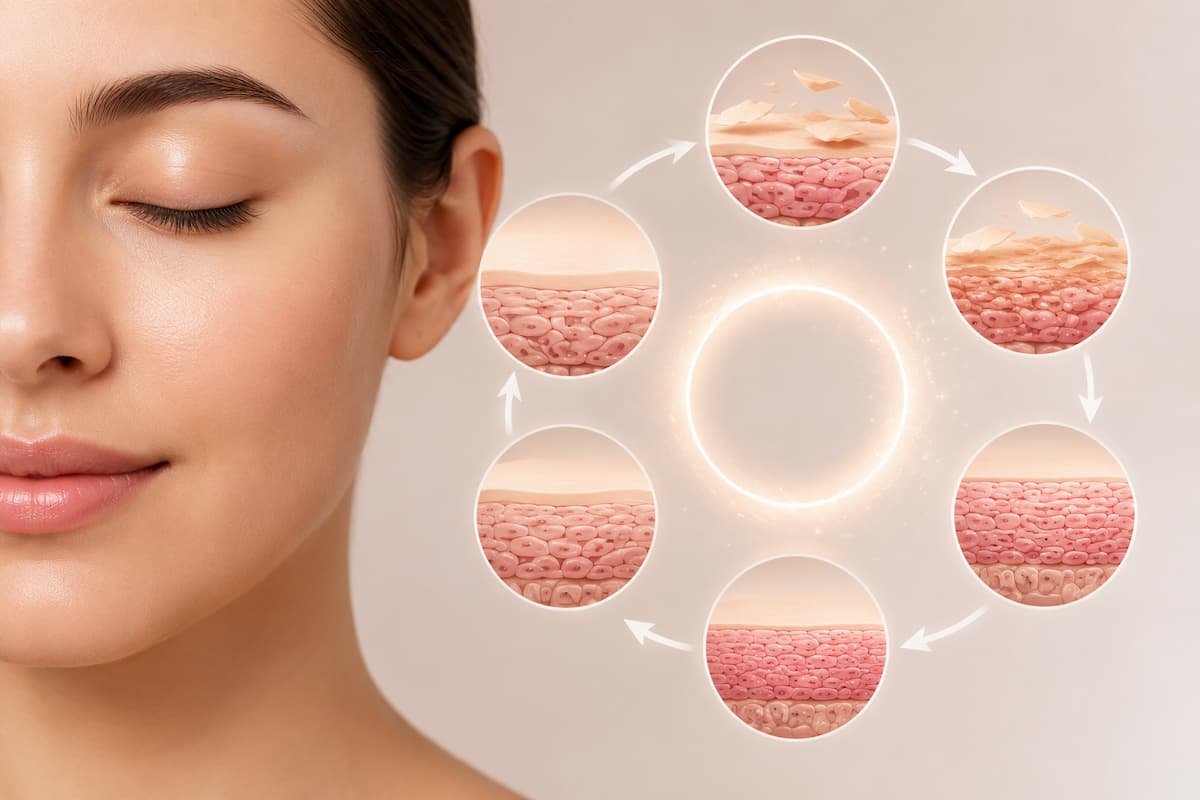
Your skin is not the same skin you had a month ago. Right now, as you read this, millions of tiny cells on the surface of your face are preparing to flake off and become dust. Beneath them, fresh cells are pushing upward, making a journey that started deep in your skin about four weeks ago. This process is called the skin renewal cycle, and it happens whether you notice it or not. Most people think of skin as something static, like a wrapper that just sits there. But skin is alive, busy, and constantly rebuilding itself from the inside out. The 28-day turnover is not a myth from beauty magazines. It is a real biological rhythm that dermatologists have studied for decades. Understanding how this cycle works can change how you treat your skin, how patient you are with new products, and why some skincare advice actually does more harm than good.
When I first learned about the 28-day cycle, it completely changed my expectations. I used to get frustrated when a new cream or routine did not show results in three days. I would switch products constantly, scrub harder, and layer on more treatments. My skin would get irritated, and I would blame the product. The truth was that I was interrupting a delicate process that needed time and stability to complete itself. Your skin is not a wall that you can repaint overnight. It is a living organ with its own schedule, and that schedule runs on roughly a four-week loop. If you fight the cycle, you lose. If you work with it, your skin rewards you.
What Happens Deep Beneath the Surface
The entire renewal process begins in the deepest layer of your epidermis, called the stratum basale. This is where stem cells live, and their only job is to divide and create new skin cells. These fresh cells are plump, full of water, and packed with proteins. Once born, they start a slow migration upward through several layers of skin. As they travel, they change shape, lose their nucleus, and fill with a tough protein called keratin. By the time they reach the top layer, the stratum corneum, they are flat, dead, and ready to shed. This entire journey from birth to shedding takes approximately 28 days in healthy adults, though the timeline can stretch longer as you age.
The stratum corneum is what you actually see and touch. It is made of about 15 to 20 layers of dead cells that form a protective barrier against the outside world. This barrier keeps water in and harmful substances out. When the renewal cycle is healthy, old cells flake off at a rate that matches the production of new cells below. But when the cycle is disrupted, problems show up. Dead cells can cling to the surface too long, making skin look dull and rough. Or new cells can be produced too quickly, leading to buildup and clogged pores. Conditions like acne, psoriasis, and eczema are all linked to abnormal cell turnover rates. Your skin is not just a surface. It is a factory with a precise production line, and every layer has a role in keeping that line moving smoothly.
Why the 28-Day Number Is Not Fixed
The 28-day cycle is an average, not a rule written in stone. In babies and children, skin renews much faster, sometimes in as little as 14 days. This is why young skin looks so radiant and heals so quickly. In teenagers, the cycle often speeds up too, which is part of why acne becomes common during those years. The rapid cell production can cause dead cells to pile up in pores before they have a chance to shed naturally. By the time you reach your twenties and thirties, the cycle settles into that familiar 28-day rhythm. But here is where it gets interesting. After age forty, the cycle starts to slow down. For some people in their fifties and sixties, renewal can take 45 to 60 days or even longer.
This slowing is one of the main reasons mature skin tends to look thinner, drier, and less vibrant. The dead cell layer stays on the surface longer, creating a dull appearance and exaggerating fine lines. Collagen production also decreases with age, which means the new cells arriving at the surface have less support structure beneath them. You cannot stop this slowdown, but you can support your skin through it. Gentle exfoliation can help remove lingering dead cells and encourage the cycle to keep moving. Hydration and sun protection protect the new cells as they make their journey. But the most important thing is patience. If you are over forty and trying a new skincare routine, you may need six to eight weeks to see real results because your cycle simply takes longer to complete. The beauty industry rarely mentions this, because selling instant results is more profitable than selling patience.
Cycle Speed by Age Group
Babies and children renew skin in roughly 14 days. Teenagers often see faster turnover around 21 days. Adults in their prime average 28 days. After age 40, the cycle gradually extends to 45-60 days or more.
How Your Habits Speed Up or Slow Down the Cycle
Your daily choices have a direct impact on how efficiently your skin renews itself. Sleep is one of the most powerful factors. During deep sleep, blood flow to the skin increases, delivering oxygen and nutrients that fuel cell production. Growth hormone peaks during sleep, and this hormone is essential for tissue repair and regeneration. People who consistently sleep less than seven hours often show signs of slower renewal, including dullness, uneven texture, and slower healing from blemishes. Stress is another major disruptor. Chronic stress elevates cortisol, which can trigger inflammation and interfere with the normal signals that tell skin cells when to divide and when to stop. You might notice your skin breaking out or looking tired during stressful periods, and that is partly because the renewal cycle is struggling.
Diet matters more than most people realize. Your skin cells need protein to build keratin, healthy fats to maintain their cell membranes, and vitamins like A, C, and E to function properly. Vitamin A is especially important because it regulates how quickly cells differentiate and move through the layers. A deficiency can cause skin to become rough and dry, while adequate levels support smooth turnover. Sun exposure is a double-edged sword. Small amounts of sunlight help your skin produce vitamin D, which plays a role in skin health. But excessive UV damage destroys the DNA in skin cells, forcing the body to remove damaged cells faster than normal. This accelerates aging and can lead to abnormal growth patterns. Smoking is one of the worst habits for skin renewal. It narrows blood vessels, reducing the oxygen and nutrients that reach your skin. Studies show that smokers often have skin that looks years older than their actual age, partly because the renewal cycle is constantly compromised.
Exfoliation: Helping or Hurting the Natural Process
Exfoliation is one of the most misunderstood practices in skincare. The idea is simple. By removing dead cells from the surface, you reveal the newer, brighter cells underneath and encourage the cycle to continue efficiently. But there is a fine line between helping and harming. Physical scrubs with rough particles can create micro-tears in the skin, triggering inflammation and actually slowing down healthy turnover. Chemical exfoliants like alpha hydroxy acids and beta hydroxy acids work by dissolving the bonds between dead cells, allowing them to shed more easily. When used correctly, these can support the natural cycle. When overused, they strip away cells that are not ready to leave, exposing immature skin that is more vulnerable to damage and irritation.
The key is to match your exfoliation to your skin type and your cycle stage. If you have young, resilient skin, you might tolerate exfoliation twice a week. If your skin is mature, sensitive, or compromised, once a week or even less may be plenty. Over-exfoliation is incredibly common because people expect immediate smoothness and glow. But when you remove too many layers of the stratum corneum, you damage the barrier that keeps moisture in and irritants out. Your skin responds by becoming red, tight, and flaky. Some people mistake this flakiness for a need for more exfoliation, creating a vicious cycle of damage. The smarter approach is to exfoliate gently and consistently, then give your skin time to complete its renewal before judging the results. Remember, the cells you are trying to reveal are still on their way up from the deep layers. You cannot rush biology.
Warning Signs of Over-Exfoliation
Persistent redness, stinging when applying products, tightness after cleansing, increased sensitivity to sunlight, and skin that looks shiny but feels dry are all signals that your barrier is compromised and your renewal cycle needs a break.
Why Patience Is the Most Underrated Skincare Ingredient
The skincare industry thrives on promises of overnight transformation. Every product launch claims to erase wrinkles, brighten dark spots, or clear acne in days. But when you understand the 28-day cycle, you realize that most of these promises are physically impossible. A new cell born today will not reach the surface for nearly a month. So any product claiming to change your skin in a week is either lying or working on the surface level only. Surface-level changes can look impressive temporarily. A good moisturizer can plump the stratum corneum with water, making fine lines less visible for a few hours. A brightening serum might remove oxidized cells from the surface, creating a temporary glow. But genuine, lasting improvement requires supporting the entire cycle from the basal layer upward.
This is why dermatologists always say to give a new routine at least six to eight weeks before judging it. They are not being conservative. They are being realistic. In six weeks, you have allowed two full cycles to complete. The cells that were influenced by your new product at the deepest layer have now traveled to the surface, and you can see what the product actually did. If you abandon a routine after ten days because you do not see miracles, you are quitting before the biology has had a chance to show you the truth. This patience applies to everything from retinoids to vitamin C to gentle cleansers. Consistency over time always beats intensity for a few days. Your skin is a long-term project, not a weekend renovation.
Supporting Your Cycle Without Overcomplicating Things
You do not need a ten-step routine to support healthy skin renewal. The basics matter more than the extras. A gentle cleanser removes dirt and pollution without stripping the barrier. A moisturizer with ceramides and fatty acids reinforces the stratum corneum so new cells arrive at a healthy, intact surface. Daily sun protection prevents UV damage from disrupting the cycle and causing premature cell death. A single active ingredient targeted to your specific concern, used consistently, is usually enough to make a real difference over one or two full cycles. The mistake is adding more products when you do not see instant results. More is not better. It is just more opportunity for irritation and confusion.
Your skin knows what it is doing. It has been renewing itself since before you were born. Your job is to protect the process, not to dominate it. Drink water, sleep well, manage stress, eat foods that support cell health, and be gentle with your barrier. When you treat the 28-day cycle with respect, your skin will show you what it is capable of. The results will not be instant, but they will be real, lasting, and entirely yours.
| Factor | Effect on Renewal Cycle | Practical Tip |
|---|---|---|
| Sleep (7-9 hours) | Supports growth hormone and cell repair | Keep a consistent bedtime even on weekends |
| Chronic Stress | Elevates cortisol and slows turnover | Build a 10-minute daily wind-down routine |
| Vitamin A Intake | Regulates cell differentiation speed | Include sweet potatoes, carrots, and leafy greens |
| Sun Exposure | UV damage accelerates abnormal cell death | Use SPF 30 daily, even on cloudy days |
| Smoking | Reduces oxygen delivery and delays renewal | Seek support to reduce or quit gradually |
Related Articles from Our Site
Understanding your skin’s natural rhythm is just one piece of the wellness puzzle. If you want to learn more about how your body repairs itself during rest, read How Your Brain Clears Toxins While You Sleep. The connection between sleep quality and skin health is deeper than most people realize.
For those dealing with uneven skin tone or dark spots, our article Hyperpigmentation: The Real Science Behind Dark Spots explains the biological mechanisms behind discoloration and why patience matters there too.
If you have ever wondered whether your elaborate skincare routine is actually helping, check out Your 10-Step Skincare Routine Might Be Doing More Harm Than Good. Sometimes the best thing you can do for your skin is simplify and let nature handle the rest.
Stress shows up on your face in more ways than one. Our piece Stress Breakouts Are Real — Cortisol Leaves Evidence on Your Face explores how hormonal disruption from stress directly impacts your skin cycle and what you can do about it.
Finally, hydration plays a major role in how plump and healthy your new skin cells look when they reach the surface. Learn the facts in What Drinking Water Actually Does for Your Skin.
Sources and References
Farage MA, Miller KW, Elsner P, Maibach HI. “Structural characteristics of the aging skin: a review.” Cutaneous and Ocular Toxicology, 2007. This review outlines how the epidermal turnover rate slows with age and the structural changes that accompany this slowdown.
Bouwstra JA, Ponec M. “The skin barrier in healthy and diseased state.” Biochimica et Biophysica Acta, 2006. This study details the function of the stratum corneum and the journey of keratinocytes from the basal layer to the skin surface.
Kligman AM. “The biology of the stratum corneum.” The Epidermis, 1964. A foundational work that established much of our understanding of the 28-day renewal cycle in healthy adult skin.
Zouboulis CC, Makrantonaki E. “Clinical aspects and molecular diagnostics of skin aging.” Clinical Dermatology, 2011. This paper discusses how hormonal changes and external factors affect the speed of epidermal turnover across different life stages.
Varani J, Dame MK, Rittie L, et al. “Decreased collagen production in chronologically aged skin: roles of age-dependent alteration in fibroblast function and defective mechanical stimulation.” American Journal of Pathology, 2006. This research connects slower cell renewal with reduced collagen support in aging skin.
Choi EH, Brown BE, Crumrine D, et al. “Mechanisms by which psychologic stress alters cutaneous permeability barrier homeostasis.” Archives of Dermatology, 2005. This study demonstrates how psychological stress and elevated cortisol disrupt normal skin barrier function and renewal.
Mukhtar H, Elmets CA. “Photocarcinogenesis: mechanisms, models and human health implications.” Photochemistry and Photobiology, 1996. This review explains how ultraviolet radiation damages skin cell DNA and accelerates abnormal cell turnover patterns.
Dréno B, Zouboulis CC, Gollnick H, et al. “Acne in adults: an update.” Journal of the European Academy of Dermatology and Venereology, 2013. This clinical update includes discussion of how altered keratinocyte turnover contributes to adult acne development.
About this article: This guide was written to help readers understand the biological reality behind skin renewal and why patience is essential in any skincare journey. The content is based on peer-reviewed dermatological research and is intended for general educational purposes. It does not replace professional medical advice from a board-certified dermatologist.

Aisha Patel is the main writer and editor at GameVolts, a site she built to make neuroscience and health research useful for everyday people. She covers sleep, digital wellness, beginner fitness, skin science, and productivity — always digging into the original studies rather than recycling headlines. Aisha started GameVolts because she kept finding wellness advice that contradicted itself and rarely linked to actual evidence. Her rule is simple: if she cannot explain the mechanism behind a claim, she does not publish it.