
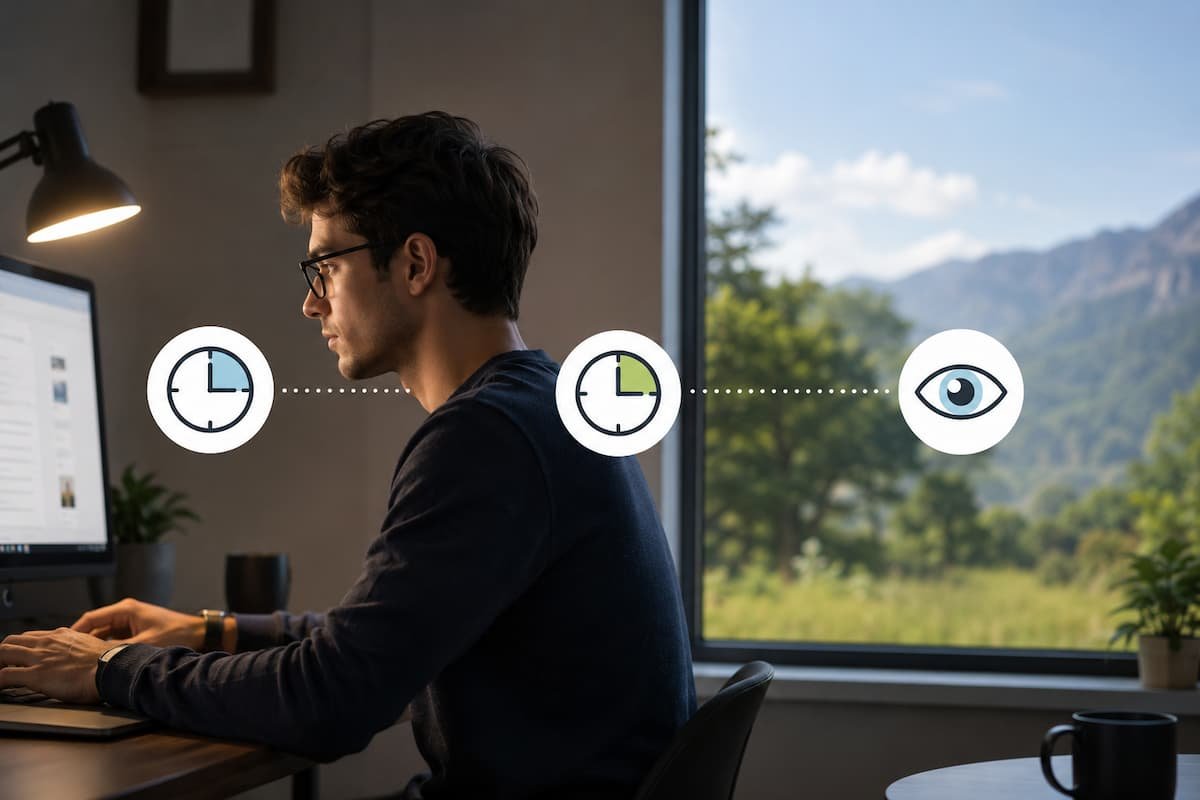
Eye discomfort caused by long periods of screen use has become increasingly common. Symptoms such as dry eyes, blurred vision, headaches, and difficulty focusing often appear after many hours of digital activity. Fortunately, reducing eye strain does not always require complicated solutions. One of the easiest habits people can adopt is known as the 20-20-20 rule.
This simple technique takes only a few seconds and can easily fit into everyday routines. Understanding how it works and why eye specialists recommend it may help heavy screen users maintain better visual comfort.
The 20-20-20 rule means that every 20 minutes, you should look at something about 20 feet away for at least 20 seconds. This short break helps your eyes relax after focusing on nearby screens.
Why Screen Time Can Tire the Eyes
Human eyes naturally change focus throughout the day. However, screens demand continuous close-up attention. Whether reading articles, replying to messages, or editing documents, the eyes remain fixed at nearly the same distance for long periods.
This constant focusing causes the muscles around the eyes to work harder. At the same time, many people blink less when looking at digital displays. Reduced blinking can contribute to dryness and irritation.
Several factors may increase discomfort during prolonged screen use:
- Bright displays and glare
- Poor room lighting
- Small text sizes
- Long working hours without breaks
- Dry indoor air
- Improper sitting positions
- Viewing screens too closely
Over time, these factors may contribute to what is often called digital eye strain or computer vision syndrome.
Understanding the 20-20-20 Rule
The concept behind the 20-20-20 rule is straightforward. Every twenty minutes, pause your work and direct your gaze toward an object located approximately twenty feet away. Maintain that focus for at least twenty seconds before returning to the screen.
This brief change allows the eye muscles to relax from prolonged near work. The practice does not eliminate all effects of screen use, but it may help reduce fatigue and improve comfort throughout the day.
| Step | Action |
|---|---|
| 20 Minutes | Pause your screen activity. |
| 20 Feet | Look at something far away. |
| 20 Seconds | Allow your eyes to relax before returning to work. |
How the Rule Helps Eye Muscles Relax
When reading or working on a screen, the eyes focus on nearby objects. This process involves muscles that continually adjust the lens inside the eye. Constant close focus can lead to temporary fatigue.
Looking at distant objects changes the focusing demand. The muscles responsible for near vision get an opportunity to relax. These short interruptions may reduce feelings of eye tiredness and improve overall comfort during lengthy computer sessions.
Many people blink less frequently while using digital devices. Taking regular breaks may naturally encourage blinking, which helps keep the eyes moist and comfortable.
Common Symptoms of Digital Eye Strain
Not everyone experiences eye strain in the same way. Symptoms may vary depending on screen habits, lighting conditions, and overall eye health.
Some common complaints include:
- Dry or irritated eyes
- Blurred vision
- Headaches
- Burning sensations
- Difficulty focusing
- Neck and shoulder discomfort
- Watery eyes
- Eye fatigue
These symptoms are usually temporary. However, persistent problems should be discussed with an eye care professional.
Who Can Benefit from the 20-20-20 Rule?
The habit can benefit nearly anyone who spends significant time looking at digital screens.
This includes:
- Office workers
- Students attending online classes
- Remote employees
- Graphic designers
- Programmers
- Writers and editors
- Gamers
- People who frequently use smartphones
Children and teenagers may also benefit, especially since many educational and recreational activities now involve screens.
Ways to Remember the Rule
Many people become deeply focused on their tasks and forget to take breaks. Fortunately, there are simple ways to make the habit easier.
| Reminder Method | How It Helps |
|---|---|
| Phone alarms | Creates regular notifications. |
| Computer apps | Provides break reminders automatically. |
| Smartwatch alerts | Offers subtle reminders. |
| Sticky notes | Keeps the rule visible near the workspace. |
Other Healthy Habits That Support Eye Comfort
Although the 20-20-20 rule is helpful, eye comfort depends on several factors. Combining this habit with good screen practices may provide better results.
Maintain Proper Viewing Distance
Most experts recommend keeping computer screens roughly an arm’s length away. Sitting too close may increase visual demands.
Adjust Screen Brightness
A screen that is excessively bright or too dim can contribute to discomfort. Matching display brightness with room lighting often improves viewing comfort.
Increase Text Size
Squinting to read small text forces the eyes to work harder. Larger fonts make reading easier and reduce unnecessary strain.
Blink More Often
Blinking spreads moisture across the eye surface. Conscious blinking can help reduce dryness during long sessions.
Improve Lighting Conditions
Glare from windows or overhead lights may increase eye fatigue. Positioning screens properly and using curtains or anti-glare settings can help.
Place the top of your monitor slightly below eye level and sit comfortably with good posture. Eye strain and body discomfort often go hand in hand.
Can the 20-20-20 Rule Prevent Eye Damage?
Many people worry that prolonged screen use permanently damages vision. Current evidence does not suggest that computers or smartphones directly cause lasting eye damage in most individuals.
However, extended screen exposure may cause temporary symptoms that affect comfort and productivity. The 20-20-20 rule is intended to reduce strain rather than cure eye diseases or replace regular eye examinations. People experiencing severe pain, sudden vision changes, or persistent symptoms should seek professional medical advice.
Making the Habit Part of Everyday Life
One reason the 20-20-20 rule remains popular is its simplicity. It requires no equipment, medication, or expensive devices. It can be practiced at work, at home, in schools, and even while using smartphones.
Over time, these short visual breaks may become automatic. Similar to stretching during exercise or drinking water throughout the day, eye breaks can become a normal part of healthy routines. Consistency matters more than perfection. Missing a few reminders is not a problem. The goal is simply to reduce long periods of uninterrupted close-up work.
Modern Life and the Importance of Eye Awareness
Digital technology has transformed how people communicate, work, and learn. Screens are likely to remain a central part of everyday life. Instead of avoiding technology altogether, developing healthier habits can help people use devices more comfortably.
Simple practices often have lasting benefits. The 20-20-20 rule represents one of those small habits that can fit naturally into busy schedules without disrupting productivity. As screen time continues to increase worldwide, awareness of eye comfort becomes increasingly important. Paying attention to visual health today may help support better habits for years to come.
Final Thoughts
The 20-20-20 rule offers a practical and easy way to manage the effects of extended screen use. By looking away from the screen every twenty minutes and focusing on something distant for twenty seconds, people may give their eyes a chance to relax and recover.
While this habit alone cannot solve every eye-related problem, combining it with proper lighting, regular blinking, good posture, and routine eye examinations may contribute to greater comfort during daily digital activities. In a world filled with screens, sometimes the simplest habits are the easiest to maintain—and the most valuable.
Sources and References
- American Academy of Ophthalmology (AAO) – Digital Eye Strain and the 20-20-20 Rule.
- American Optometric Association (AOA) – Computer Vision Syndrome.
- National Eye Institute (NEI) – Protecting Your Eyes While Using Digital Devices.
- Centers for Disease Control and Prevention (CDC) – Healthy Vision Tips.
- Mayo Clinic – Eyestrain: Symptoms and Causes.
- Harvard Health Publishing – Managing Eye Fatigue in the Digital Age.

Aisha Patel is the main writer and editor at GameVolts, a site she built to make neuroscience and health research useful for everyday people. She covers sleep, digital wellness, beginner fitness, skin science, and productivity — always digging into the original studies rather than recycling headlines. Aisha started GameVolts because she kept finding wellness advice that contradicted itself and rarely linked to actual evidence. Her rule is simple: if she cannot explain the mechanism behind a claim, she does not publish it.