
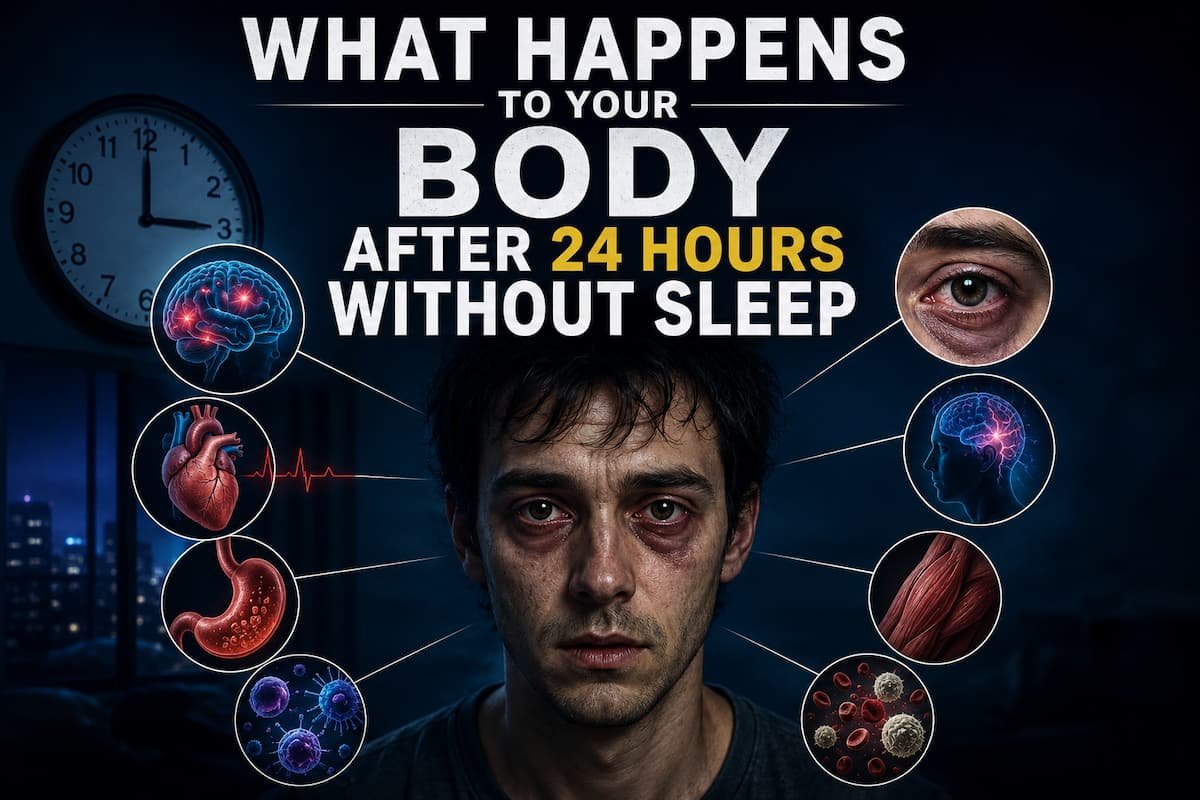
Most people have experienced at least one night when sleep simply did not happen. Maybe it was because of work, studying, travel, stress, or taking care of a family member. Missing a few hours of sleep can leave anyone feeling tired, but staying awake for an entire day affects the body in ways that go far beyond simple fatigue.
Sleep is not just a period of rest. During sleep, the body repairs tissues, regulates hormones, strengthens the immune system, and allows the brain to process information. When that recovery time disappears, many systems throughout the body begin to respond. Although one sleepless night is unlikely to cause permanent damage in healthy adults, even 24 hours without sleep can have noticeable effects on physical health, mental performance, mood, and reaction time.
Being awake for approximately 24 hours can impair attention, concentration, and reaction speed to a degree comparable to having a blood alcohol concentration of about 0.10%, which is above the legal driving limit in many countries.
The First Few Hours: The Body Tries to Adapt
During the first several hours after bedtime is skipped, the body attempts to compensate. Stress hormones such as cortisol may rise slightly to help maintain alertness. Many people feel relatively normal during this stage, especially if they are occupied or consuming caffeine. However, the brain already recognizes that it is missing essential rest. Internal biological clocks continue signaling that it is nighttime, creating increasing pressure to sleep. This process is known as sleep drive. The longer someone stays awake, the stronger that drive becomes.
Changes That Begin Throughout the Day
| Hours Awake | Common Effects |
|---|---|
| 12 Hours | Mild tiredness, reduced concentration |
| 16 Hours | Lower alertness, slower thinking |
| 20 Hours | Mood changes and impaired memory |
| 24 Hours | Reduced reaction time, fatigue, and poor judgment |
Your Brain Starts Working Less Efficiently
The brain depends heavily on sleep. After about 24 hours without rest, communication between different areas of the brain becomes less effective. Tasks that normally feel easy may suddenly become difficult. Concentration drops, memory suffers, and decision-making becomes slower. Even simple conversations may require more effort. People often report feeling mentally “foggy” after staying awake all night. This sensation is sometimes called brain fog, and it reflects temporary changes in how the brain processes information.
Research has shown that sleep deprivation particularly affects the prefrontal cortex, the area of the brain responsible for planning, reasoning, and judgment.
Reaction Time Becomes Slower
One of the most dangerous consequences of sleep deprivation is slower reaction time. Driving, operating machinery, and performing tasks that require quick decisions become riskier after a full day without sleep. Studies have repeatedly found that sleep deprivation can impair performance similarly to alcohol intoxication. This is why drowsy driving is considered a serious safety concern around the world.
Your Mood Begins to Change
Sleep and emotions are closely connected. After 24 hours without sleep, many people become more irritable, impatient, or emotionally sensitive. Minor frustrations may feel overwhelming. Some individuals experience anxiety, while others become unusually emotional or have difficulty handling stress. Lack of sleep also reduces the brain’s ability to regulate emotions effectively, which explains why tempers can flare more easily during periods of exhaustion.
Memory and Learning Are Affected
Sleep helps the brain organize memories and store new information. Without adequate rest, this process becomes disrupted. People who stay awake for 24 hours often have trouble remembering details, learning new concepts, or maintaining focus during conversations. This effect is especially noticeable among students, shift workers, and people preparing for important examinations.
The Immune System Receives Less Support
The immune system relies on sleep to function efficiently. During sleep, the body produces substances that help fight infections and inflammation. One sleepless night may not immediately cause illness, but repeated episodes of sleep deprivation can weaken immune defenses over time. Researchers have found that individuals who regularly fail to get enough sleep are more susceptible to common infections such as colds.
Hormones Become Less Balanced
Sleep influences several important hormones. After staying awake for an entire day, levels of cortisol, often called the stress hormone, may increase. Hormones involved in hunger regulation also become disrupted. This imbalance can lead to stronger cravings, especially for sugary foods and high-calorie snacks. Some people notice that after a sleepless night, they feel unusually hungry even if they have eaten enough food.
Sleep deprivation can increase levels of ghrelin, the hormone that stimulates appetite, while decreasing leptin, the hormone responsible for signaling fullness.
Your Eyes Feel the Effects Too
Many physical symptoms become noticeable after prolonged wakefulness.
- Dry eyes.
- Frequent blinking.
- Difficulty focusing.
- Sensitivity to bright light.
- Redness and irritation.
These symptoms occur because the eyes themselves also benefit from periods of rest.
The Body Experiences Microsleeps
After extended wakefulness, the brain sometimes forces itself into extremely brief episodes of sleep known as microsleeps. These episodes may last only a few seconds, and a person may not even realize they have occurred. Microsleeps are particularly dangerous while driving because they temporarily disconnect awareness from the surrounding environment.
Coordination and Balance Decline
Staying awake for 24 hours affects physical coordination. Movements may become less precise, and balance can suffer. Athletic performance often declines, and activities requiring accuracy may become harder. This explains why fatigue increases the likelihood of accidents and injuries.
The Heart and Blood Vessels Feel Extra Stress
Sleep helps regulate blood pressure and supports cardiovascular health. Missing one night of sleep may temporarily increase blood pressure and activate stress responses. While occasional sleep loss is usually manageable for healthy adults, chronic sleep deprivation has been associated with increased risks of heart disease and hypertension. The body performs many repair functions during sleep, and these processes become disrupted when rest is absent.
How Caffeine Changes the Picture
Many people rely on coffee or energy drinks after staying awake all night. Caffeine can temporarily improve alertness, but it does not replace sleep. It mainly blocks adenosine, a chemical that promotes sleepiness. The underlying biological need for sleep remains. Once caffeine wears off, exhaustion often returns quickly. Excessive caffeine intake can also increase nervousness, anxiety, and heart palpitations.
What Happens If Sleep Loss Continues?
Twenty-four hours without sleep is uncomfortable, but more extended sleep deprivation becomes increasingly serious.
| Time Without Sleep | Possible Effects |
|---|---|
| 36 Hours | Extreme fatigue and reduced concentration |
| 48 Hours | Microsleeps and memory difficulties |
| 72 Hours | Confusion and perceptual disturbances |
Prolonged sleep deprivation can become dangerous and should never be intentionally pursued.
Can You Recover From One Sleepless Night?
Fortunately, the body is remarkably resilient. Most healthy adults recover from a single night without sleep after obtaining sufficient rest. Recovery sleep helps restore cognitive function, improve mood, and support physical repair. However, trying to “catch up” on weeks of poor sleep with one long weekend sleep session is far less effective. Consistency matters more than occasional compensation.
Healthy Habits That Support Recovery
After experiencing a sleepless night, experts generally recommend:
- Returning to a normal sleep schedule.
- Staying hydrated.
- Eating balanced meals.
- Limiting excessive caffeine.
- Avoiding alcohol.
- Skipping activities that require maximum alertness if possible.
- Allowing the body adequate time to recover.
Frequently Asked Questions
1. Can staying awake for 24 hours cause permanent damage?
In healthy adults, one night without sleep usually does not cause permanent harm. However, chronic sleep deprivation can have long-term health consequences.
2. Is it safe to drive after being awake for 24 hours?
No. Reaction time and attention are significantly impaired, making driving much more dangerous.
3. Why do people feel hungry after missing sleep?
Sleep deprivation affects hormones that regulate appetite, increasing cravings and hunger.
4. Can coffee replace sleep?
No. Caffeine may temporarily improve alertness, but it cannot provide the restorative benefits of actual sleep.
5. How much sleep do adults generally need?
Most adults benefit from seven to nine hours of sleep each night, according to major sleep organizations.
Sources and References
- Centers for Disease Control and Prevention (CDC) – Sleep and Sleep Disorders.
- National Heart, Lung, and Blood Institute (NHLBI) – Healthy Sleep.
- American Academy of Sleep Medicine (AASM).
- National Institute of Neurological Disorders and Stroke (NINDS) – Brain Basics: Understanding Sleep.
- Harvard Medical School Division of Sleep Medicine.
- Sleep Foundation – Effects of Sleep Deprivation.
- National Institutes of Health (NIH) – Sleep Research.
- Johns Hopkins Medicine – Sleep and Health Resources.

Aisha Patel is the main writer and editor at GameVolts, a site she built to make neuroscience and health research useful for everyday people. She covers sleep, digital wellness, beginner fitness, skin science, and productivity — always digging into the original studies rather than recycling headlines. Aisha started GameVolts because she kept finding wellness advice that contradicted itself and rarely linked to actual evidence. Her rule is simple: if she cannot explain the mechanism behind a claim, she does not publish it.