
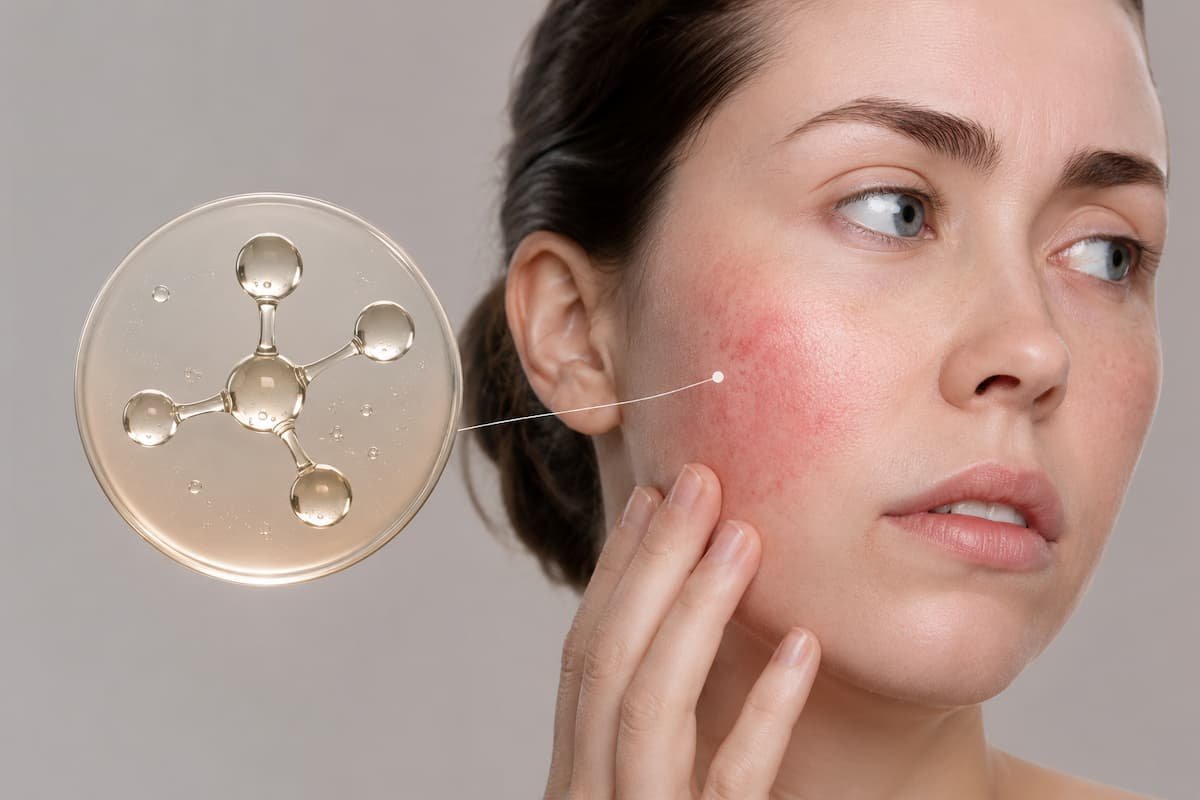
Here is a dirty little secret the beauty industry hopes you never figure out. That lovely scent wafting from your moisturizer? It is doing absolutely nothing for your face. Nada. Zero. Zip. Yet fragrance sneaks into roughly 95% of personal care products like an uninvited guest who refuses to leave. For folks with sensitive skin, this guest does not just overstay its welcome. It trashes the place.
I learned this the hard way. Spent two years bouncing between dermatologists, slapping on steroid creams, blaming my “reactive skin” for every flare-up. Never once did anyone ask about my shampoo. My laundry detergent. The pillowcase I pressed against my cheek for eight hours nightly. Turns out my immune system had declared war on a single molecule hiding in all of them. The war ended the day I kicked fragrance out of my life entirely. My skin did not just improve. It transformed. This article exists because nobody told me what I am about to tell you.
The Sneaky Seven: Parfum, perfume, fragrance, aroma, essential oil blend, limonene, linalool. Spot any of these? Your sensitive skin just found its enemy.
Why Your Nose Loves What Your Face Hates
Human brains are wired weird. We trust pleasant smells. A floral lotion feels “cleaner” than an odorless one. A citrus cleanser seems “fresher.” Marketers have exploited this quirk since the first perfumed cold cream hit Victorian dressing tables. But here is what your olfactory pleasure costs your skin barrier.
Fragrance molecules are volatile by design. They evaporate fast, which is how they reach your nose. That same volatility lets them slip through compromised skin barriers like water through a cracked dam. Once inside, they meet Langerhans cells. These immune sentinels patrol your epidermis, and they do not negotiate with intruders. They flag fragrance compounds as threats, mobilize inflammatory troops, and suddenly your face is burning, stinging, or breaking out in hives. The kicker? This reaction might not show up for days. Your immune system plays the long game. It remembers. It waits. Then it attacks with biblical vengeance on exposure number ten, or fifty, or five hundred.
The concentration does not matter much once sensitization occurs. A trace amount in your “unscented” fabric softener can trigger the same response as dousing yourself in eau de parfum. Your immune system has no volume control. It only knows on or off.
The Natural Fragrance Trap
“But I only use natural products!” I hear this constantly. It is perhaps the most dangerous misconception in skincare. Poison ivy is natural. Arsenic is natural. Essential oils, those darlings of the clean beauty movement, contain some of the most potent skin allergens nature ever brewed.
Lavender oil? Linalool and linalyl acetate are both documented allergens. Tea tree oil? Contains eucalyptol and limonene, frequent troublemakers. Citrus oils? Packed with limonene and furocoumarins that can cause phototoxic reactions when exposed to sunlight. Your immune system does not check whether a molecule came from a lab or a lavender field. It reacts to the molecular structure, period. A synthetic version of linalool and a natural version trigger identical immune responses. The “natural” label is marketing poetry, not a biological fact.
Worse yet, natural fragrances often contain more complex mixtures than synthetic ones. A lab-created fragrance might use five molecules. A rose essential oil contains hundreds. More variables mean more opportunities for your immune system to find something it dislikes. The simpler the fragrance profile, the easier it is to identify and avoid triggers. Natural complexity is not your friend when your skin is already touchy.
European regulations require listing 26 known fragrance allergens separately on labels. The US has no such requirement. That “fragrance” umbrella term can hide anything literally.
Where the Enemy Camps
Most people hunt for fragrance in obvious places. Perfume bottles. Scented candles. Body sprays. But the real damage comes from products pretending to be innocent bystanders.
Your shampoo rinses down your forehead, leaving residue near your hairline. Your conditioner transfers from your pillow to your cheek. Your laundry detergent perfumes your sheets, your towels, your work shirts. Your hand soap leaves traces on your fingers that you unconsciously transfer to your face hundreds of times daily. Your “gentle” cleanser contains masking fragrance to hide the chemical smell of surfactants. Your “hypoallergenic” sunscreen uses fragrance to make the UV filters more palatable. The assault is constant, invisible, and cumulative.
I once helped a friend troubleshoot persistent eyelid dermatitis. She had eliminated every facial product, switched to “sensitive skin” everything, seen three specialists. Nobody asked about her hair dye. Her semi-permanent color contained PPD and fragrance compounds that vaporized during application, settled on her eyelids, and kept the inflammation smoldering. Changed her dye, problem vanished. The fragrance was never touching her face directly. It did not need to.
Decoding Labels Like a Pro
Reading ingredient lists is a survival skill for sensitive skin. Here is your cheat sheet. Any of these terms mean fragrance is present, regardless of what the front label claims:
Parfum, perfume, fragrance, aroma, essential oil blend, natural fragrance, masking fragrance. Then the individual allergens that must be listed in the EU but often hide under “fragrance” in the US: linalool, limonene, citronellol, geraniol, eugenol, coumarin, citral, alpha-isomethyl ionone, hexyl cinnamal. Learn them. Memorize them. Treat them like poison labels, because for your skin, they are.
“Unscented” deserves special suspicion. This term means the product has no noticeable odor. It does not mean no fragrance chemicals were used. Many unscented products contain masking fragrances specifically designed to neutralize other smells. The result smells like nothing but contains the same allergens. “Fragrance-free” is the only label worth trusting, and even then, verify the ingredient list yourself. Regulations are loose, enforcement is lax, and marketing departments are creative.
| Label Claim | What It Actually Means | Trust Level |
|---|---|---|
| Fragrance-free | No fragrance ingredients added | High (verify ingredients) |
| Unscented | No noticeable smell; masking fragrance may be present | Low |
| For sensitive skin | Marketing term; no regulatory definition | Worthless |
| Natural fragrance | Fragrance from natural sources; allergens identical to synthetic | Misleading |
The Recovery Timeline Nobody Talks About
Quit fragrance cold turkey, and your skin might actually look worse for two weeks. This freaks people out. They panic, declare fragrance-free living does not work, and crawl back to their scented comfort zone. Do not do this. The initial worsening is withdrawal, not failure.
Your skin has been in a state of chronic low-grade inflammation, possibly for years. Immune cells have set up camp. Blood vessels have dilated to supply them. The moment you remove the trigger, these cells do not instantly vanish. They linger, confused, waiting for orders that no longer come. Meanwhile, your barrier starts rebuilding, which can cause temporary flaking and sensitivity as new cells push up and old damaged ones shed. This is healing masquerading as disaster.
Week three, something shifts. The redness dims. The stinging stops. Your skin starts tolerating products it previously rejected. By week six, you might not recognize your face. The texture smooths. The tone evens. Products absorb instead of sitting on top, burning. This is not magic. It is simply your skin finally getting a break from an enemy it never should have faced.
When DIY Detective Work Fails
Sometimes you eliminate fragrance entirely and still suffer. This is not failure. It is a sign you need professional backup. Dermatologists offer patch testing, a methodical process that exposes your back to standardized panels of common allergens. The patches stay 48 hours, get removed, get read, then get read again days later for delayed reactions.
Patch testing revealed my own hidden nemesis: a fragrance cross-reactor called balsam of Peru. Found in everything from vanilla flavoring to certain medicated creams. I had been avoiding lavender while smearing on a “healing” ointment loaded with my actual trigger. Without testing, I would have hunted forever.
The test also identifies weird cross-reactions. Allergic to fragrance mix 1? You might also react to cinnamon, clove, and tomatoes. Allergic to formaldehyde releasers? Your “fragrance-free” preservative system might still be the problem. These connections are impossible to guess. They require the methodical, controlled exposure that only a clinic can provide.
Red Flags That Scream “Get Tested”
Reactions lasting longer than 48 hours. Reactions spreading beyond application sites. Reactions to products you have used for months without previous issues. Eyelid or lip swelling from unknown triggers. Any reaction that worsens despite eliminating obvious suspects.
Building Your Fragrance-Free Arsenal
Start with the big three: cleanser, moisturizer, sunscreen. These touch your face most often and stay longest. A gentle non-foaming cleanser with fewer than fifteen ingredients. A moisturizer with ceramides, cholesterol, and fatty acids in a 3:1:1 ratio, mimicking your natural barrier lipids. A mineral sunscreen with zinc oxide, which is inherently less irritating than chemical filters and needs no fragrance to mask odor.
Hair care comes next. Switch to fragrance-free shampoo and conditioner. If you cannot find them, wash your hair before your face in the shower, tilt your head back, and rinse thoroughly so residue streams away from your skin. Laundry detergent matters more than you think. Your pillowcase presses against your face for one-third of your life. Make sure it is not off-gassing allergens while you sleep.
Resist the urge to add “just one” scented product back once your skin improves. I have seen this mistake dozens of times. People heal, get cocky, add a nice-smelling serum, and crash right back to square one. Your immune system has a long memory. Once sensitized, it does not forgive. It waits. It watches. It pounces.
Related Articles
Your skin barrier is ground zero in the fight against sensitivity. Oily, Dry, or Combination: Skin Type Myths Debunked dismantles the labels that distract from what actually matters: barrier health.
Inflammation from reactions often leaves behind dark marks that outlast the original trigger. Hyperpigmentation: The Real Science Behind Dark Spots explains why these spots form and how to fade them without causing more irritation.
Stress is gasoline on the fire of sensitive skin. Stress Breakouts Are Real — Cortisol Leaves Evidence on Your Face maps the hormonal highway connecting your nervous system to your skin.
Overloading on products is a common response to sensitivity that backfires spectacularly. Your 10-Step Skincare Routine Might Be Doing More Harm Than Good makes the case for radical simplification.
Proper hydration supports barrier repair from the inside out. What Drinking Water Actually Does for Your Skin separates hydration facts from internet fiction.
Sources and References
Johansen JD, Menné T, Christophersen J, Kaaber K. “Changes in the pattern of sensitization to common contact allergens in Denmark between 1985-86 and 1997-98, with a special view to the effect of preventive strategies.” Contact Dermatitis, 2000. This study documents the rising prevalence of fragrance allergy and the impact of regulatory changes on sensitization rates.
Heisterberg MV, Menné T, Johansen JD. “Contact allergy to the 26 specific fragrance ingredients to be declared according to provisions in the European Union: a multicenter study.” Contact Dermatitis, 2011. This multicenter investigation quantifies sensitization rates to the 26 EU-regulated fragrance allergens in clinical populations.
Steinemann A. “Fragranced consumer products: exposures and effects from emissions.” Air Quality, Atmosphere & Health, 2017. This research examines the widespread presence of fragrance chemicals in consumer products and documents associated adverse health effects, including dermatological reactions.
De Groot AC, Frosch PJ. “Adverse reactions to fragrances: a clinical review.” Contact Dermatitis, 1997. This clinical review establishes the epidemiological significance of fragrance as a contact allergen and discusses diagnostic approaches.
Schnuch A, Uter W, Geier J, Lessmann H, Frosch PJ. “Sensitization to 26 fragrances to be labelled according to current European regulation: results of the IVDK and review of the literature.” Contact Dermatitis, 2007. This study provides population-level data on fragrance sensitization and evaluates the effectiveness of ingredient labeling regulations.
Warshaw EM, Belsito DV, Taylor JS, et al. “North American Contact Dermatitis Group patch test results: 2009 to 2010.” Dermatitis, 2013. This large-scale North American study provides comparative data on fragrance allergy prevalence across diverse clinical populations.
Zirwas MJ, Molenda M. “Dietary nickel as a cause of systemic contact dermatitis.” Journal of Clinical and Aesthetic Dermatology, 2009. While focused on nickel, this article discusses cross-reactivity patterns relevant to fragrance allergy management and the complexity of identifying hidden triggers.
Scheinman PL. “Allergic contact dermatitis to fragrance: a clinical review.” American Journal of Contact Dermatitis, 1996. This early clinical review outlines the presentation, diagnosis, and management of fragrance contact dermatitis, with emphasis on the challenges of ingredient avoidance.
Thyssen JP, Linneberg A, Menné T, Johansen JD. “The epidemiology of contact allergy in the general population: prevalence and main findings.” Contact Dermatitis, 2007. This population-based study provides context for understanding how common fragrance sensitization is among people who have never sought clinical care.
I wrote this because I wasted years and hundreds of dollars chasing solutions while ignoring the one trigger hiding in plain sight. No dermatologist ever asked about my shampoo. No beauty article mentioned that “unscented” is a lie. If this saves one person from the frustration I endured, it was worth every word. This is not medical advice. It is lived experience backed by research. See a dermatologist for patch testing if your symptoms persist.

Aisha Patel is the main writer and editor at GameVolts, a site she built to make neuroscience and health research useful for everyday people. She covers sleep, digital wellness, beginner fitness, skin science, and productivity — always digging into the original studies rather than recycling headlines. Aisha started GameVolts because she kept finding wellness advice that contradicted itself and rarely linked to actual evidence. Her rule is simple: if she cannot explain the mechanism behind a claim, she does not publish it.